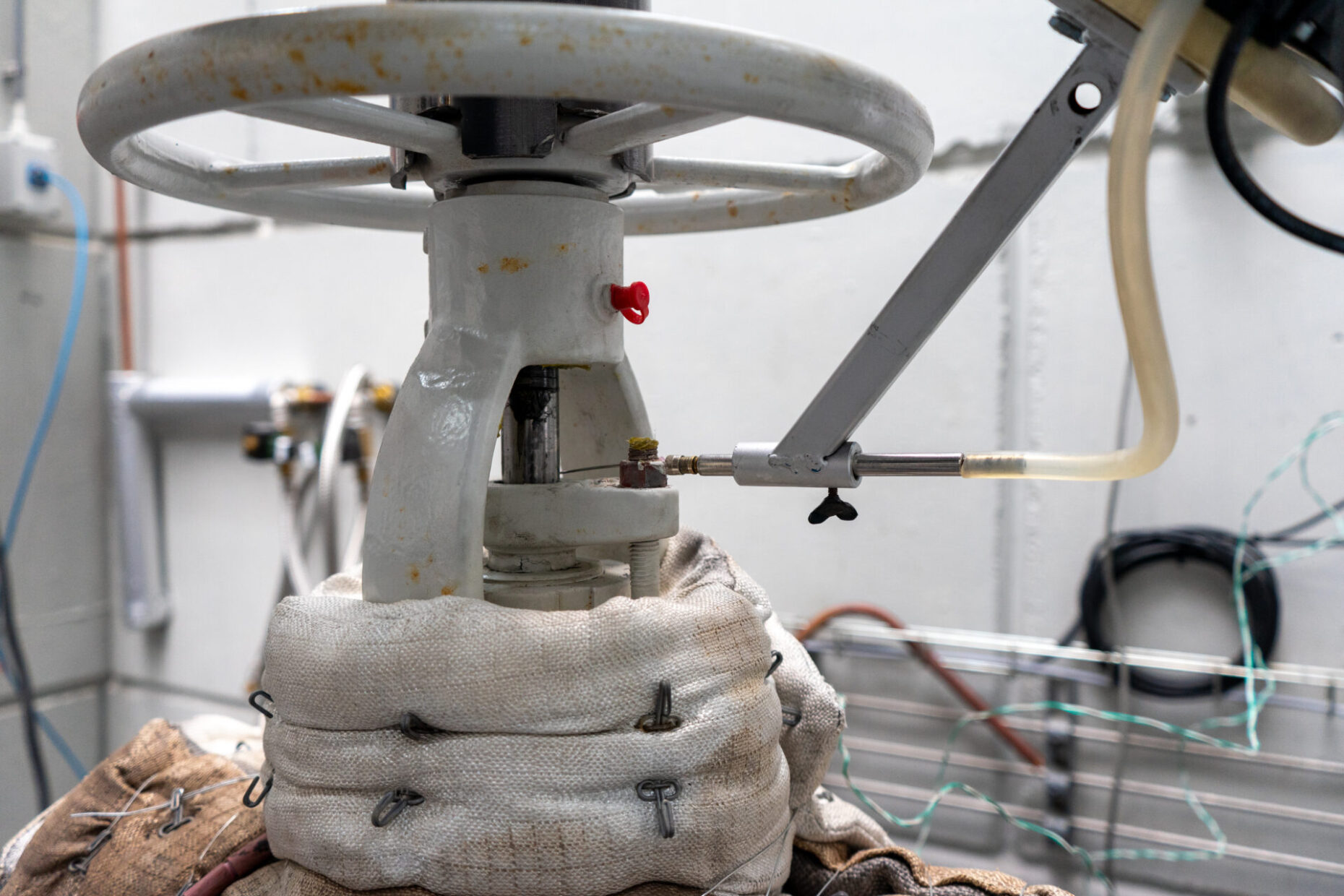

TA-Luft in Practice: What Does It Mean for Your Valves?
Do all industrial valves now need to meet CO3 requirements? Can existing valves remain in service? And is replacing an entire valve always necessary to improve its fugitive emission performance?
These are questions many valve manufacturers, plant operators and maintenance teams face when dealing with Germany’s TA-Luft requirements.
The answers are not always straightforward. Requirements depend on the application, operating conditions and whether a valve is intended for a new installation or is already in service.
Understanding these differences is essential to making informed decisions about valve qualification, maintenance and potential upgrades.
What is TA-Luft and why does it matter?
TA-Luft (Technische Anleitung zur Reinhaltung der Luft) is Germany’s regulatory framework for controlling air pollution from relevant industrial installations.
The revised TA-Luft entered into force on 1 December 2021, introducing updated requirements for the control of emissions, including fugitive emissions from industrial valves.
For certain shut-off and control valves, section 5.2.6.4 identifies 1 December 2025 as an important date regarding specified leakage performance.
However, this does not mean that every valve manufactured, sold or installed in Germany must automatically meet the same requirements.
The applicability depends on several factors, including:
- The type of industrial installation
- The substances being handled
- Operating pressure and temperature
- The installation’s permit conditions
- Specific customer or project requirements
Before deciding which tests or qualifications are necessary, it is important to establish which requirements actually apply.
New valves: What needs to be demonstrated?
For new valves intended for installations covered by TA-Luft section 5.2.6.4, fugitive emission performance is a key consideration.
The applicable leakage requirements depend on the valve’s pressure and design temperature.
DIN EN ISO 15848-1:2015 provides a recognised method for evaluating fugitive emissions from complete valve assemblies. TA-Luft also allows demonstrably equivalent testing or measurement methods.
For manufacturers, the challenge is therefore not simply obtaining a certificate. It is demonstrating that the valve meets the requirements of its intended application.
Before starting a qualification programme, several questions should be addressed:
- What are the applicable leakage requirements?
- Under which pressure and temperature conditions will the valve operate?
- Which mechanical endurance class is required?
- What existing test evidence is available?
- Are additional customer specifications applicable?
Answering these questions early can help prevent unnecessary testing while ensuring the required performance is properly demonstrated.
Existing valves: Is replacement always necessary?
One of the most common misconceptions surrounding TA-Luft is that existing valves must automatically be replaced.
This is not necessarily the case.
TA-Luft includes specific provisions that may allow certain existing shut-off and control valves to remain in operation until replacement.
For example, these provisions may apply to qualifying valves in defined liquid organic applications or valves meeting specified requirements from TA-Luft 2002.
However, these exceptions are not universal.
Whether an existing valve can remain in service depends on the specific installation, the valve’s operating conditions and the applicable permit requirements.
For plant operators, the most practical approach is therefore to assess the existing valve population before initiating a replacement programme.
Depending on the findings, the appropriate solution may involve continued operation, additional monitoring, maintenance, upgrading or replacement.
CO1, CO2 and CO3: Understanding the difference
Another area that frequently causes confusion is the distinction between leakage performance and mechanical endurance.
These are two different aspects of valve qualification.
Leakage classes describe the allowable fugitive emissions under defined test conditions.
Mechanical endurance classes describe how a valve performs over a specified number of operating cycles.
ISO 15848-1 distinguishes between:
CO classes: Mechanical endurance classifications for shut-off valves.
CC classes: Mechanical endurance classifications for control valves.
For shut-off valves, the classifications include CO1, CO2 and CO3.
Industry guidance published by VCI and VDMA identifies CO3 and CC3 as target endurance classes. However, TA-Luft section 5.2.6.4 does not establish CO3 as a universal minimum requirement for every application.
The VCI/VDMA guidance also addresses maintenance concepts. For shut-off valves qualified at CO1 or CO2, a manufacturer’s maintenance concept is recommended. For control valves, the guidance addresses maintenance concepts across all endurance classes.
Importantly, a maintenance concept does not replace the need to demonstrate the required leakage performance.
The correct qualification strategy should therefore consider both the applicable leakage requirements and the mechanical endurance expectations of the application.
ISO 12101: New opportunities for stem seal qualification
When an existing valve requires maintenance or refurbishment, replacing the complete valve is not always the only option.
The stem sealing system can be an important starting point when investigating opportunities to reduce fugitive emissions.
With the publication of ISO 12101:2025, a standardised method is now available for type testing and classifying valve stem seals.
This creates opportunities for valve manufacturers, sealing suppliers and maintenance companies to evaluate and compare stem sealing solutions under defined test conditions.
For example, during an overhaul, an existing valve may benefit from an improved packing arrangement or stem sealing system. ISO 12101 test data can help assess whether a particular sealing solution is suitable for the intended application. However, an important distinction must be made.
An ISO 12101-tested stem seal does not automatically make the complete valve TA-Luft compliant.
ISO 12101 evaluates stem seals, while ISO 15848-1 addresses fugitive emission type testing of complete valve assemblies.
The overall performance depends on factors such as valve design, seal installation, operating conditions and the interaction between the components.
Depending on the application, additional evaluation or complete valve testing may still be necessary.
Nevertheless, ISO 12101 provides a valuable technical basis for considering stem seal improvements during valve maintenance and refurbishment.
What should manufacturers and plant operators do next?
The most effective approach to TA-Luft is not necessarily to conduct more tests or replace more valves.
It is to identify the actual requirements and select the appropriate technical solution.
For plant owners and operators, this starts with reviewing the installation requirements, existing valve population and available performance documentation. From there, it becomes possible to determine which valves can remain in service and where additional action may be needed.
For valve manufacturers, the focus should be on defining the required qualification scope, understanding the available test evidence and developing an appropriate testing strategy.
For maintenance and overhaul companies, evaluating the stem sealing system may reveal opportunities to improve fugitive emission performance without immediately replacing the complete valve.
In every case, reliable test data and a clear understanding of the applicable requirements are essential.
ITIS: Your independent partner in fugitive emission testing
Understanding regulatory requirements is one thing. Demonstrating the required performance is another.
At ITIS, we support valve manufacturers and end users with independent fugitive emission testing, evaluation of test results and practical qualification strategies.
Our focus is on helping customers understand what needs to be demonstrated and identifying an appropriate testing approach for their valves and intended applications.
Whether the challenge involves qualifying a new valve, evaluating an existing design or investigating potential improvements to a stem sealing system, a structured approach can help avoid unnecessary testing while providing reliable technical evidence.
The goal is not simply to test more, but to test what matters.
Need support with fugitive emission testing?
Are you unsure which qualification requirements apply to your valves, or would you like to explore your options for testing and improving fugitive emission performance?
Contact ITIS to discuss your application and testing requirements.
NEVER SURE UNLESS ITIS TESTED
Do you have any questions or would you like to use our services? Contact us directly; we’re happy to help!