Fire Safe test itis

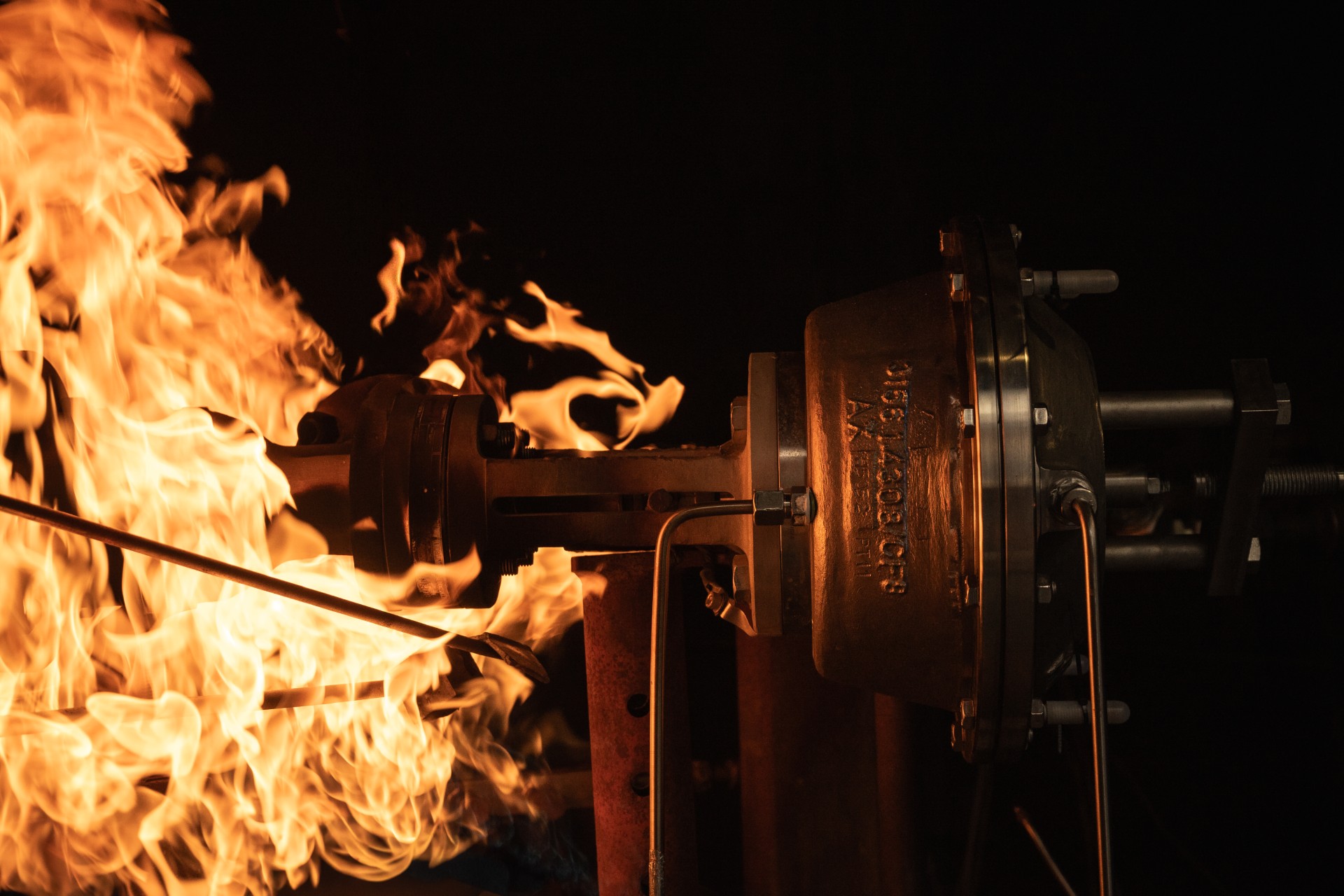
A small error in a fire-sensitive environment can have huge consequences: leaks, emissions, explosions or even a complete shutdown of your installation. Without a reliable fire safe test you don’t know whether your valves, gaskets or actuators will keep working when it really matters. In sectors such as (petro)chemicals, oil & gas, power and offshore, it can mean the difference between safety under control and a catastrophe you can no longer master.

At ITIS we perform independent, ISO 17025-accredited fire safe tests. They prove that your components can withstand extreme heat and comply with international standards. You eliminate risks, demonstrably meet regulations and strengthen the confidence of customers and authorities.

Do you want certainty that you are prepared for the worst-case scenario? Request your fire safe test today.

Want to perform a fire safe test?

Do you have any questions or would you like to have a fire safe test carried out? Get in touch with us right away – we are happy to help!
Ask IRIS

Questions about a fire safe test?

Do you have questions about a fire safe test? You no longer need to pick up the phone. With our digital specialist ‘IRIS’ you receive an instant answer to any question you want to ask about this test. From general information to specific details, simply type your question and immediately receive a clear and relevant reply. For example, questions about:

  • Test options and specifications
  • Certifications and standards

Questions about the fire safe test? Ask IRIS right away.

What is a fire safe test?

A fire safe test is an important safety test for components such as valves, actuators, gaskets, seals and fittings. These parts are exposed to extreme heat to verify whether they maintain their sealing function and can still be operated during a fire. The main goal is to prevent leaks and ensure everything keeps working. This test is also called a fire resistance test or fire safety test for valves and fittings.

Who is the fire safe test for?

This test is mainly relevant for companies that operate in fire-sensitive environments. Think of manufacturers and suppliers of valves and fittings who want to demonstrate that their products comply with international standards. It is also crucial for industries such as offshore, (petro)chemicals, energy and tank terminals, where the consequences of fire can be severe.

Why is a fire safe test necessary?

In sectors such as (petro)chemicals, oil & gas, energy, offshore and tank terminals, a fire can lead to emissions, severe environmental damage or even explosions. A fire safe test is therefore crucial: it shows whether components remain reliable in such conditions. Because these are type-approval tests, the test usually only has to be performed once to certify the fire resistance of a design or product range.

What does a fire safe test deliver?

A fire safe test in our ISO 17025-accredited, independent laboratory offers clear advantages:

  • Lower risk of leaks during fire
  • Independent proof that your products comply with international standards
  • Worldwide recognition by customers, authorities and certification bodies
  • Full independence and objective results according to the strictest quality standards
  • Confirmation that materials and designs are reliable under extreme conditions
  • More confidence from your customers: products have been demonstrably tested and are suitable for fire-critical applications
  • Transparency: tests can be followed live and reports are digitally available in the ITIS Cloud Portal

Which international standards apply?

A fire safe test is always carried out according to internationally recognised standards. The most commonly used are:

  • ISO 10497: test method to assess the fire resistance of valves, including their sealing function after fire.
  • API 607: focuses on soft-seated valves (e.g. graphite or PTFE) with emphasis on operation and sealing during and after fire.
  • API 6FA: applies to metal-seated valves to determine whether they maintain their integrity during a fire.
  • API 6FB: aimed at fire-resistant sealing systems such as gaskets and sealing materials, often combined with other standards for a complete fire safety profile.

Report & certification

After completion you receive a detailed test report. If a valve or component meets all requirements, you receive a certificate that also states the qualified types and sizes. Tests can also be followed via a secure live stream.

When the test is performed under ISO 17025 accreditation there are additional benefits:

  • International recognition of the results
  • Independent and reliable determination according to the highest quality standards
  • Extra legal and contractual value of certificates and reports

Accredited, certainty for you

ITIS is accredited by the Dutch Accreditation Council (RvA) under accreditation number L656. For you this means certainty. Our test and measurement results are demonstrably reliable and meet established quality standards.

Thanks to the international recognition via the ILAC MRA, results within scope are also accepted worldwide. This prevents re-inspections, accelerates processes and builds trust with customers, authorities and partners.

You work with an independent party that operates according to controlled procedures. This provides clarity, consistency and a solid basis for your technical and commercial decisions.

Testing according to ISO 10497

ISO 10497 is the test method to assess the fire resistance of valves, including their sealing function after fire.

Frequently asked questions about a fire safe test
What is a Fire Safe test?

A Fire Safe test assesses whether a valve maintains pressure integrity and sealing during and after exposure to fire. The valve is fully exposed to flames at 750–1000 °C for 30 minutes; temperatures are monitored using thermocouples and calorimeter blocks. (ISO 10497:2021, 5.2; 5.6.7–5.6.8)

What does "Fire Safe by Design" mean?

“Fire Safe by Design” refers to a design that utilizes fire-resistant principles or materials (e.g., graphite, metal seats). However, only a physical type test according to the standard can demonstrate that the requirements are met. (Not specified in ISO 10497)

Is Fire Safe by Design sufficient?

No. Only valves that have actually been tested according to the standard can claim conformity; design claims without test evidence are insufficient. (Not specified in ISO 10497)

What is the difference between Fire Safe Tested and Fire Safe Certified?

Tested: the valve has undergone a Fire Safe type test. Certified: the test is documented in accordance with the requirements of the standard and may have been independently witnessed; ISO 10497 does not require third-party witnessing, but a purchaser or certifying party may demand it.

(ISO 10497:2021, 6.7; Not specified in ISO 10497 regarding third‑party witnessing)

Why is the operability tested after the fire?

After the fire, the valve must be able to fully open from the closed position against the high test pressure; if this is not possible, the Fire Safe test fails. (ISO 10497:2021, 6.5)

Can all shut-off valves be tested with a single method?

The method applies to shut-off valves with one or more obturators, with specific provisions for symmetrical versus asymmetrical seats and multi-obturator designs; orientation/flow direction and design influence the method of testing. (ISO 10497:2021, 1; 4.1; 4.1.6)

What are the main Fire Safe test standards for valves?

Commonly used: ISO 10497, API 607 (quarter-turn, soft-seated) and API 6FA (upstream applications). This FAQ focuses on ISO 10497. (Not specified in ISO 10497)

Can one test comply with multiple standards?

ISO 10497 does not cover cross-certification. In practice, one fire test can sometimes suffice for multiple standards if all requirements are met, but acceptance is determined per standard and per end user. (Not specified in ISO 10497)

Which standard should I choose?

Choose based on valve type and application: ISO 10497 (general industrial valves), API 607 (ASME Class quarter-turn soft-seated), API 6FA (upstream/pipeline). (Not specified in ISO 10497)

Are test results according to ISO 10497 accepted worldwide?

ISO 10497 is internationally recognized; acceptance depends on the policies of customers/regulators. Testing in an ISO/IEC 17025-accredited laboratory increases international acceptance. (Not specified in ISO 10497)

Can older ISO 10497 reports still be used?

Yes, provided they are submitted together with the complete, compliant report from the edition under which the valve was originally tested. For double-seated valves without fixed cavity setpoint and/or cavity pressure data, an additional overpressure cavity test at ambient conditions is required as an attachment to the original report. (ISO 10497:2021, 1; 4.2.3; 5.3.2.8)

What information must be provided in advance?

Typical input: valve data (size, pressure class, materials), proof of production testing and drawings/Bill of Materials for identification. The standard specifies which report components must be present after the test (e.g. drawings, materials, tightening torques, pressures, temperatures). (ISO 10497:2021, 6.7)

Why is welding test flanges preferred in Fire Safe testing?

The standard excludes leakage from pipe-to-valve end connections from the external leakage assessment; sometimes modifications are necessary to exclude such leakage. Welded test flanges are a laboratory practice to prevent false rejection due to gasket leakage. (ISO 10497:2021, 5.3.1; 6.6 note)

Can I be present at the test?

Presence or remote witnessing can be arranged; ISO 10497 does not require witnessing. (Not specified in ISO 10497)

How long does a Fire Safe test take?

A full test including setup, 30 minutes of fire, cooling, final test, and dismantling often takes one working day per valve, depending on size/class and logistics. (Not specified in ISO 10497)

What is a cavity relief provision and when is it required?

For double-seated valves, the system must include overpressure protection to prevent cavity overpressure during fire; cavity pressure monitoring during fire is mandatory for all double-seated valves. (ISO 10497:2021, 4.2; 5.3.2.8)

What happens when the cavity relief is activated?

When the valve’s own relief opens, the test continues and leakage is classified: to atmosphere = external leakage; to downstream = through-seat leakage. If the test rig’s protection opens, the test is stopped and declared invalid. (ISO 10497:2021, 4.2.1–4.2.2; 5.6.11; 5.6.13)

How can I prepare my valve for cavity pressure measurement?

Install a dedicated cavity connection (e.g., 1/4” NPT/BSP or equivalent) for the pressure sensor; local reinforcement is permitted if the connection would otherwise weaken the strength. (ISO 10497:2021, 5.3.2.8)

What if my valve does not have a cavity relief port?

A temporary modification (e.g., drilling and welding a fitting) is permitted for testing purposes, provided the design remains representative; details are recorded in drawing/report. (ISO 10497:2021, 5.3.2.8; 6.7 h)

Why must cavity pressure be monitored during fire?

Cavity pressure can increase sharply during fire unless relieved; monitoring is mandatory to demonstrate that the design remains within safe limits and to prevent rupture. (ISO 10497:2021, 5.3.2.8; Introduction)

What if cavity monitoring is technically impossible?

ISO 10497 does not provide for an explicit exception; if monitoring is truly not possible, the deviation must be documented and strict compliance cannot be claimed. (Not specified in ISO 10497)

Can valves with multiple obturators be tested?

Yes. The standard specifies how assemblies with multiple obturators can be qualified; if all obturators and seals have the same design, one configuration can cover the rest. (ISO 10497:2021, 4.1.6)

Does a gearbox fall within the test?

If the valve is tested with a gearbox, that assembly is qualified; tests with a gearbox qualify the same valve without a gearbox, but not vice versa. (ISO 10497:2021, 4.1.4)

Are powered actuators (electric, pneumatic, hydraulic) tested?

No. These fall outside the scope of ISO 10497; only manually operated gearboxes or similar mechanisms that are part of the valve assembly fall within scope. (ISO 10497:2021, 1)

Can actuator housings be tested?

Only if they are part of the valve assembly and relevant to the sealing; otherwise, other applicable standards apply. (ISO 10497:2021, 1)

Does one Fire Safe test cover all materials?

No. Material groups: ferritic, austenitic, duplex, and nickel alloys. Expansion can be done by testing one representative valve per additional group. (ISO 10497:2021, 7.3.1–7.3.3)

What is the qualification range (covering range)?

One test can qualify different sizes and pressure ratings of the same basic design within the limits in Tables 2–3; a DN 200 / NPS 8 test can cover all larger sizes of the same design. (ISO 10497:2021, 7.1 a); 7.5; Tables 2–3)

Qualification by size (ISO 10497:2021 — 7.5.1, Table 2)

ISO 10497 Table 2 (Qualification by size)
Size test valve Other qualified sizes (NPS/DN)
NPSa DNb NPSa DNb
½ and smaller 15 All sizes 2 and smaller All sizes 50 and smaller
¾ 20 All sizes 2 and smaller All sizes 50 and smaller
1 25 All sizes 2 and smaller All sizes 50 and smaller
1 ¼ 32 All sizes 2 ½ and smaller All sizes 65 and smaller
1 ½ 40 All sizes 3 and smaller All sizes 80 and smaller
2 50 2 and smaller; 2 ½; 3; 4 50 and smaller; 65; 80; 100
2 ½ 65 2 ½; 3; 4; 5 65; 80; 100; 125
3 80 3; 4; 5; 6 80; 100; 125; 150
4 100 4; 5; 6; 8 100; 125; 150; 200
5 125 5; 6; 8; 10 125; 150; 200; 250
6 150 6; 8; 10; 12 150; 200; 250; 300
8 200 8 and smaller 200 and smaller
a  Nominal pipe size (piping and pipeline valves)

b Nominal pipe size (piping and pipeline valves)


Qualification by pressure rating (ISO 10497:2021 — 7.5.2, Table 3)

Qualification by pressure rating (ISO 10497:2021 — 7.5.2, Table 3)
Rating test valve Other valve ratings qualified
Classa PNb Classa PNb
  10 150 10; 16
  16 150 16; 25
150   150; 300 10; 16; 25; 40
  25 150; 300 25; 40
300 40 300; 400; 600 40; 63; 100
  63 300; 400; 600 63; 100
400   400; 600; 800 63; 100
600 100 600; 800; 900 100; 160
800   800; 900; 1500 100; 160; 250
900 160 900; 1500 160; 250
1500 250 1500; 2500 250; 400
2500 400 2500; 4500 400; 700
4500 700 4500 700
a  Nominal pipe size (piping and pipeline valves)

b Nominal pipe size (piping and pipeline valves)

Note: It is recognized that ASME B16.5 Class 900 flanges smaller than NPS 3 have the same dimensions as Class 1500. If the Class 900 valve is suitable for both ratings, a Class 900 test valve in this range may be tested at Class 1500, thereby qualifying the tested valve as Class 900, Class 1500, and Class 2500.


Can a smaller valve qualify a larger one?

Yes. Testing on NPS 8 (DN 200) qualifies all larger sizes of the same design; for smaller sizes see Table 2 for the exact coverage. (ISO 10497:2021, 7.1 a); Table 2)

ISO 10497 Table 2 (Qualification by size)
Test valve size Other qualified sizes (NPS/DN)
NPSa DNb NPSa DNb
½ and smaller 15 All sizes 2 and smaller All sizes 50 and smaller
¾ 20 All sizes 2 and smaller All sizes 50 and smaller
1 25 All sizes 2 and smaller All sizes 50 and smaller
1 ¼ 32 All sizes 2 ½ and smaller All sizes 65 and smaller
1 ½ 40 All sizes 3 and smaller All sizes 80 and smaller
2 50 2 and smaller; 2 ½; 3; 4 50 and smaller; 65; 80; 100
2 ½ 65 2 ½; 3; 4; 5 65; 80; 100; 125
3 80 3; 4; 5; 6 80; 100; 125; 150
4 100 4; 5; 6; 8 100; 125; 150; 200
5 125 5; 6; 8; 10 125; 150; 200; 250
6 150 6; 8; 10; 12 150; 200; 250; 300
8 200 8 and smaller 200 and smaller
a  Nominal pipe size (piping and pipeline valves)

b Nominal pipe size (piping and pipeline valves)

What if I change the material of the seat or packing?

Changes in non-metallic seat, spindle, or body seals require re-qualification, except within the same polymer/elastomer family (e.g., PTFE→PTFE). Lip seals do not qualify O-rings and vice versa. (ISO 10497:2021, 7.3.5)

Does the type of end connection matter?

The end type itself does not; the mass criterion does apply. Valves with other end connections are covered if the mass ≥ the test valve mass or ≥ 75% thereof and other criteria are equal. (ISO 10497:2021, 7.1 e)

Do other bolt materials require new testing?

Often yes. Ferritic bolt materials can qualify austenitic stainless steel bolts (not the other way around); other alloys require separate testing. A mid-range test of the same design with the new bolt material can qualify the range for that material. (ISO 10497:2021, 7.3.4)

What do I receive after a successful test?

An extensive test report with all items from 6.7 (e.g. pressures/temperatures logged every 30 seconds, results regarding leaks, drawings/BoM, torque values). Shut-off valves that have been tested according to this document may be marked with “ISO‑FT”. (ISO 10497:2021, 6.7; 8)

What if the shut-off valve fails?

Failure to meet leakage limits or operability means a failed Fire Safe test. The standard allows invalidation if the rig protection opens or if facility malfunctions affect the result. (ISO 10497:2021, 5.1; 4.2.2; 6.2–6.6)

Do I need a Notified Body?

ISO 10497 does not require a Notified Body; whether a third-party witness/certification is needed is determined by the customer or supervision. (Not specified in ISO 10497)

Can the test be repeated if results are unclear?

Yes, in consultation. A repetition must maintain identical configuration and conditions for validity and comparability. (Not specified in ISO 10497)

Is the test dangerous?

Yes. Fire Safe tests carry risks; the standard includes safety warnings and requires protective measures and qualified personnel. (ISO 10497:2021, 5.1)

Can a single physical fire test meet multiple standards (ISO 10497 with API 607 and/or API 6FA)?

ISO 10497 says nothing about cross-certification. In practice, a single fire test can sometimes serve multiple standards if all requirements are met; feasibility depends on size/class, pressure setpoints, sequence steps (e.g. low-pressure operability in ISO/API 607), and acceptance by the end user.

For small sizes (< NPS 2) and lower classes (≤ Class 900), separate certification procedures are often required. (Not specified in ISO 10497)

At ITIS, it’s simply a given that we offer our customers the best service possible. We understand their needs and desires and are always focused on providing the highest quality service and solutions.

Logo
Logo
Logo
Logo
Logo
Logo
Logo
Logo
Logo
Jeroen De Dobbelaere
Hilde Nieuwdorp
Patrick Van Tol
We are rated on average with: To all reviews
8,9