
Lektesten ITIS

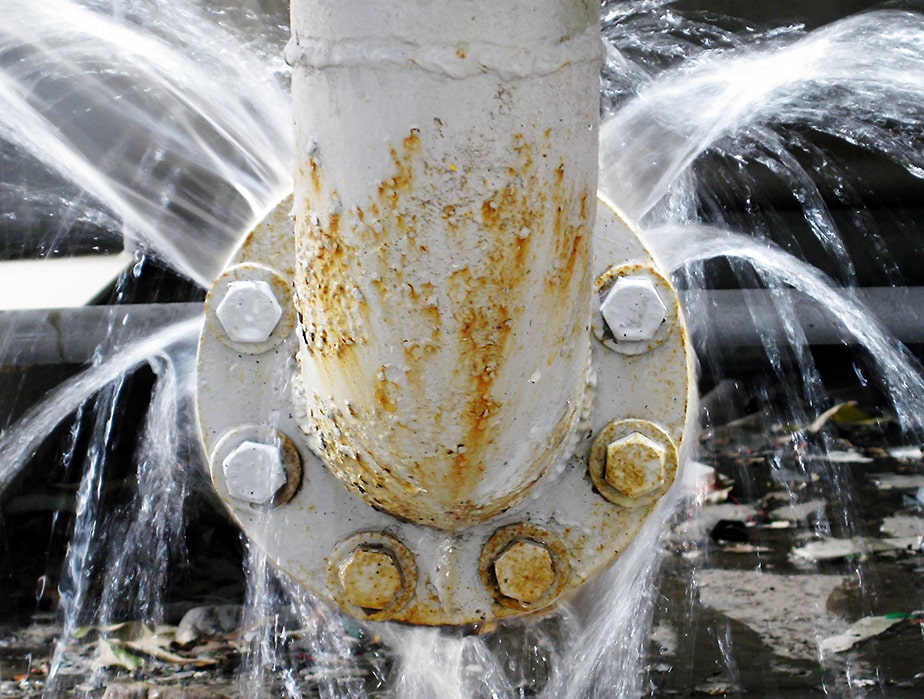
A leak test provides objective evidence of whether a component or system is sufficiently tight under the conditions in which it must operate. By testing under over-pressure or vacuum we establish not only IF there is leakage, but also how much and where it occurs. This gives you upfront insight into risks of product loss, emissions, quality issues and unsafe situations.

For both end-users and manufacturers a leak test offers reliable proof towards specifications, standards and regulators, and helps avoid unplanned downtime or costly repairs. ITIS performs these tests independently and traceably, in the laboratory or on-site, with clear reports that can be used immediately in engineering, maintenance and compliance.

Want to be certain your installation or product is truly leak-tight? A professional leak test by ITIS provides the clarity you need!

Need a leak test?

Questions or want to schedule a leak test? Contact us directly—we are happy to help!

What is a leak test?

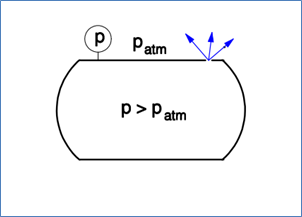
Leak tests are objective examinations to determine whether a component or system meets agreed tightness requirements, performed under over-pressure or under vacuum. With over-pressure the object is above atmospheric pressure and we measure outflow (inside-out); with vacuum the object is below atmospheric pressure and we measure inflow from outside (outside-in). The choice depends on purpose, required detection limit, medium and operating conditions, but also on practical aspects such as accessibility, safety and turnaround time.

We combine integral tests—measuring the total leak flow of the complete object—with local tests that pinpoint individual leaks when useful. First proving THAT an object leaks too much, then determining WHERE and by how much. Methods range from simple water/soap-bubble tests and pressure-decay measurements to helium sniffer, accumulation and vacuum tests with a mass spectrometer, optionally supplemented with ultrasound as a quick screening in large installations.

Why you should perform a leak test

Leaks can lead to product loss, emissions and unsafe situations, and in addition to unplanned downtime or quality degradation of products and processes. A requirement such as “zero leakage” is not verifiable in practice; you can only demonstrate that the leak rate is below the detection limit under defined conditions. That is why we work with maximum allowable leak values (for instance in Pa·m³/s, mbar·l/s or std cm³/s) and we record method, pressure, temperature, tracer, measurement time and pass/fail criteria beforehand in a test plan.

If desired we convert the measured leak rate into an emission in, for example, kg/year, so you can directly link the results to environmental and permit requirements, LDAR objectives or life-cycle costs of your installation.

Who is a leak test for?

The main parties that benefit from a leak test are:

End-users:
Objective proof that components or installations operate safely and according to specification, well-founded decisions on maintenance, modifications and commissioning, and stronger justification towards HSE, asset management and authorities.

Manufacturers / suppliers:
Type and production testing as evidence for design and material choices and sealing concepts; less rejection during FAT/SAT and when delivered to the customer, and a clearer technical story for end-users and notified bodies.

The best outcomes of the leak test for you

  • Safety & environment: demonstrably lower emissions and risks
  • Reliability: early detection and localisation of leaks before they cause failures
  • Compliance: evidence towards standards, legislation, regulators and asset owners
  • Less downtime: fewer emergency repairs and unplanned interventions during production
  • Clarity: measurement data linked to predefined acceptance criteria in understandable reports
  • Transparency: independently executed tests, traceable reporting and clear traceability of results

Why ITIS is the right partner

ITIS is an ISO 17025 accredited test laboratory and therefore a conformity assessment body. We perform leak tests under controlled conditions in our lab or with mobile setups on site, with attention to safety (TRA, work permit, ATEX), representative test conditions and traceable results. Where necessary we think along with test design, preparations and planning so that testing remains feasible within your project or shutdown.

The right report and certification for you

You receive a complete test report including standard/method, test setup, parameters, results with correct units, test conditions and a clear conclusion against the maximum allowable leak value(s). Where relevant we can perform tests under ISO 17025 accreditation. In that case method, equipment, calibrations, reporting and quality assurance are assessed by the Dutch Accreditation Council and the ILAC-RvA logo may be placed on the report—often a requirement in international projects.

Accredited certainty for you

ITIS is accredited by the Dutch Accreditation Council (RvA) under accreditation number L656. This means certainty for you. Our test and measurement results are demonstrably reliable and meet established quality standards.

Thanks to the international recognition through the ILAC MRA, results within scope are also accepted internationally. This avoids re-inspections, speeds up processes and gives confidence to customers, regulators and partners.

You work with an independent party that operates according to controlled procedures. That provides clarity, consistency and a solid basis for your technical and commercial decisions.

Guaranteed leak-tight

Certainty about tightness, safety and continuity, independently executed, where relevant under ISO 17025 accreditation, in our laboratory in Goes (NL) or at your site, with test methods tailored to your installation and sector.

Frequently asked questions about a Leak Test
Why is a sniff test often considered “semi-quantitative”?

A sniff test does give an impression of the size of a leak, but the outcome strongly depends on the conditions and the method of measurement. The result is therefore less “hard” than with a vacuum measurement using a leak detector. Some reasons:

  • The measurement is operator-dependent – someone can move faster or slower, or use a different search strategy.
  • The distance to the surface (for example a weld or gasket) varies, which affects the measured signal.
  • Air flows and drafts dilute or disperse the tracer gas, causing peaks to be lower or spread out.
  • It is not certain that all the escaping tracer gas flows past the sniff probe; some can disperse into the surroundings and is therefore not measured.

For these reasons, a sniff test is generally called “semi-quantitative”: good for detecting leaks and estimating them broadly, but less suited for recording an exact leak value.

Afbeelding10

What is a conformity assessment body, and what does that mean for ITIS?

A conformity assessment body (in Dutch: conformiteitsbeoordelingsinstantie, CBI) is an independent organization that assesses whether products, processes, persons, or services comply with established requirements, such as legislation, standards, or specifications. Examples of such activities are testing, inspection, calibration, and certification.

ITIS is an ISO 17025-accredited testing laboratory and thus a conformity assessment body: we conduct tests under controlled and accredited conditions and objectively report the measurement results relative to the requested standard or limit values. Whether those results are acceptable in a project, contract, or permit is ultimately determined by the client, end user, or competent authority.

What is a leak test?

An objective test to determine whether a component or system meets agreed tightness requirements, conducted under overpressure or under vacuum.

What are the main methods?

Overpressure: the object is above atmospheric pressure and we measure outflow (English: inside-out).

Vacuum: the object is under pressure and we measure inflow from outside (English: outside-in). The choice depends on purpose, desired detection limit, medium, and operating conditions.

Wat is het verschil tussen integrale en lokale testen? (Copy)

Een integrale test bepaalt de totale lekstroom van het complete object en toetst die aan de maximale toelaatbare lekwaarde, een lokale (partiële) test spoort juist plaatselijk lekken op om de exacte locatie te vinden.

Afbeelding8Afbeelding9

Can leak tests take place on site?

Yes, with mobile setups tests can take place at the customer’s location provided that safety and conditions are ensured.

Is ‘zero leakage’ as a requirement realistic?

No. ‘Zero’ is not demonstrable with the measurement methods we know; you can only show that the leakage current is lower than the detection limit under recorded conditions. That is why standards work with a maximum allowable leakage value (≤ X in Pa·m³/s, mbar·l/s or std cm³/s), including method, pressure, temperature, tracer, and measurement duration.

Why ‘zero’ is not verifiable – briefly explained:

  • Detection limit: every instrument has a lower limit.
  • Measurement uncertainty: results always have variation.
  • Background/noise: environmental gas, residual tracer, and electrical noise influence the signal.
  • Permeation and desorption: gases pass through materials or come from cavities (virtual leaks).
  • Conditions: small variations in pressure/temperature change the measured leakage current.
Which sectors are leak tests often prescribed for?

In the process industry, (petro)chemicals, energy, HVAC, automotive, cryogenics, aerospace, and aviation, leak tests are often prescribed.

What are common units for leak rate?

The SI unit is Pa·m³/s, – in practice mbar·l/s and std cm³/s (scc/s) are widely used; in the US also torr·l/s. They all express “pressure × volume per time” because gases are compressible.

Useful conversions:

1 Pa·m³/s = 10 mbar·l/s

1 Pa·m³/s ≈ 7.5 torr·l/s

1 std cm³/s ≈ 1.0 mbar·l/s (at 0 °C and 1 atm)

Tip: choose one main unit in your report and always state the reference conditions used.

How do leak tests compare to pressure tests with fluids?

Pressure tests with fluid primarily verify the mechanical strength and integrity of objects, while leak tests with gas specifically assess the tightness and leak rate using more sensitive detection methods and lower detection limits.

Why is it preferable not to perform a hydrotest before a gas leak test?

Water can temporarily “seal” microleaks (surface tension/films), causing a subsequent gas leak test to appear wrongly ‘good’. Therefore, performing a hydrotest before a gas leak test is strongly discouraged!

Is a hydrotest equivalent to a leak test?

No. A hydrotest tests objects for strength and/or functionality. Gas leak tests assess an object for tightness and leak rate with much lower detection limits. Different objective, different sensitivity.

Does water mask small leaks during a hydrotest?

Yes. Micro-pores and capillary channels can be completely sealed by a water film or residue; gas leaks then remain undetected.

Is a hydrotest equivalent to a leak test?

No. Hydrotest = strength/structure; gas leak test = tightness/leak rate. Different objective, different and lower sensitivity.

What is the sensitivity of water/soap bubble tests?

Suitable for “coarse” leaks; order of magnitude is much higher than the limits of, for example, helium sniffer tests.

Can a test in a water bath or the use of soapy spray block leak channels?

Yes. Water, dirt, corrosion products, or additives can partially block small channels and give a false “leak-tight” impression.

What is the effect of hydrotesting on vacuum compatibility?

Water penetrates pores, walls, and seals and remains adsorbed, causing the outgassing time to increase significantly and the detection limit of subsequent leak tests to deteriorate. Without bake-out, prolonged firing at elevated temperature, the vacuum compatibility does not recover.

Is there an additional risk of corrosion/contamination during or after a hydrotest?

Yes. Wet components corrode faster; the process gets contaminated (wastewater/additives), and you need to clean/dry thoroughly.

Can you still reliably test gas under vacuum conditions after a hydrotest?

Only after complete drying/degassing (possibly bake-out) and testing with a reference leak; this costs (extra) time and money.

Does a pressure drop test with air help after a hydrotest?

Limited. Temperature/moisture influence makes the measurement unstable; for fine leaks a tracer gas test with, for example, helium remains much more sensitive.

What is the correct order if both a leak test and a hydrotest are required?

First perform the leak test, overpressure or vacuum, then the hydrotest. This prevents moisture from negatively affecting the sensitivity of the leak test.

When is hydro defensible?

Only if a code/customer requires this for strength, but then separate that test from the (later) gas leak test and schedule forced dry stepping.

How do you ensure that water does not disrupt the process?

Avoid it. If it must: test with disassembly, dry immediately (warm/forced), bake-out where possible, and measure background until a stable situation is reached to perform the leak test.

What do you include in the acceptance criteria for a gas leak test?

Max. leak rate (unit + reference conditions), method (sniffer/accumulation/vacuum), pressure/temperature, tracer, measurement duration, and test result: pass/fail.

Does material choice affect hydro?

Yes. Elastomers and porous materials retain moisture (permeation/desorption); metal seals are more predictable in dry tests.

What is the impact on lead time/planning?

Hydro before gas leak test extends lead time due to drying times, degassing, and extra calibration, without measurement benefit.

When do I choose overpressure and when vacuum?

Overpressure at representative operating pressure and leak test with a sniffer probe; vacuum for lower detection limits.

Does the test direction matter in leak testing (inside-out vs. outside-in)?

Yes. Preferably test in the direction of the practical situation: inside-out (overpressure) if the medium normally wants to go outward, or outside-in (vacuum) if practice requires it. Testing in the “wrong” direction can lead to different (test) results.

Why test under operating conditions (pressure/temperature) instead of room conditions?

A leak test at room temperature and vacuum reveals little if the object operates in use at, for example, 500 bar and +200 °C. Material behavior, clearances, and seals change with pressure and temperature. Therefore, testing under (or representative of) the actual operating conditions is preferred.

What is the accumulation method in leak testing?

The test object is internally pressurized with tracer gas. Around the test object, or around a part of the object to be tested, a sealed collection area is created (e.g., with a hood or tape). If gas leaks out, it collects in this area.

By measuring the increase of the tracer gas concentration in the collection area over the test duration, the actual leak rate can be calculated based on the known volume and the measured time.

What is the ‘bombing technique’ (helium) in leak testing?

The bombing method determines internal leakage by first “loading” a component with helium and then measuring the helium diffusing out.

Steps:

  1. Bombing

Place the component in a pressure vessel and pressurize the vessel with helium for a predetermined time. Any leaks allow helium to enter the component.

  1. Measuring under vacuum

Remove the component from the pressure vessel and place it in a vacuum chamber. Measure the diffusion with a helium leak detector; the measured helium outflow corresponds to the integral leak rate.

Afbeelding7

What is a leak test with a vacuum box?

A soap solution is applied to the surface to be tested. A transparent vacuum box is placed over it, whose volume is vacuumed with a pump. In case of a leak, the pressure difference causes foam formation under the box, visible through the window.

Afbeelding6

Application: mainly for parts that cannot be internally pressurized, such as tank bottoms and walls, ship hulls, and weld seams.

What is a practical sensitivity of a bubble test?

Go/no‑go, leaks up to approx. 1×10⁻³ mbarˑlˑs-1 can be detected (EN1779); quantifying the leak is limited.

Which leaks can be detected with the integral helium vacuum test?

Very small leaks, up to approximately 10⁻⁹ mbar·l·s⁻¹, depending on equipment, test setup, background, pumping speed, and test duration.

What is the difference between direct sniffing and an integral test with a sniffer probe?

Direct sniffing is mainly used to detect and locate a leak along seams, welds, or joints. The sensitivity depends greatly on the distance to the surface, the speed of movement, and the person performing the measurement.

In an integral test with a sniffer probe, the entire object (or a part of it) is tested inside a shielded volume or under a hood, and the total leak flow is measured. This total leak value is then compared with a predefined acceptance limit.

How do I determine the correct speed for local sniffing?

First calibrate on a reference leak in the most critical zone. Adjust speed and distance so that you get a stable, reproducible signal. Record these settings and keep them as constant as possible during the test: distance and speed.

Afbeelding5

Which standards are relevant for general leak tests?

Commonly used standards for leak tests are: EN 1779: guideline for method selection; ISO 20485: tracer gas tests; EN 1593: bubble test and ASME BPVC Section V, Article 10: leak examination with various techniques.

What exactly does the ISO 20485 standard describe?

The standard addresses principles, test setups, and procedures for tracer gas leak tests with helium, halogens, and H₂/N₂, includes classification into groups A and B, describes response and cleanup times, calibration, and the requirements for reporting and measurement uncertainty.

What does the standard EN 1779 add compared to ISO 20485?

Systematic selection table with recognition letters for techniques and detection limits.

What does ASME Section V Article 10 describe?

Overview of methods (bubble, sniffer, mass spectrometer, pressure drop, ultrasonic) and requirement for a written procedure with parameters.

What role does the ISO 20484 standard play?

ISO 20484 establishes all terms and definitions for leak tests, it is the terminology standard on which ISO 20485 and other standards are based. This prevents misunderstandings and ensures clear specifications and reporting.

When is EN 1593 relevant?

For bubble emission (bubble test) as a quick go/no-go method for larger leaks.

What personnel qualifications for NDT are common?

Europe: ISO 9712 (centralized, standardized certification; e.g. method PT). Training and exams via national NDT organizations.

United States: ASNT SNT-TC-1A (recommended practice; company establishes its own Written Practice and certification program).

Are national versions of ISO/EN important?

Yes, they ensure uniform application per country and language (e.g. NEN‑EN‑ISO 20485:2018).

Equipment, Calibration & Uncertainty

Which detectors are used in tracer gas testing?

Mass spectrometer (He‑4), halogen diode, thermal conductivity, optical detectors, depending on tracer and sensitivity requirement.

How do you calibrate a leak detector?

With traceable reference leaks and verification of response/cleanup time and detection limit before, and after, the test.

What is the typical measurement uncertainty?

Depending on method and conditions; for industrial leak testing uncertainties of up to ±50% are often mentioned.

What are common sources of error in vacuum testing?

Virtual leaks, contamination, residual gases, permeation, and variations in background.

Which reference leaks do you need?

Range appropriate to the acceptance limit and the method (sniffer vs. vacuum) with a valid certificate.

What do response and cleanup time of a helium leak detector mean?

Response: time to ~90% stable signal; cleanup: time until background is restored.

Can you convert leak rates to another gas or different conditions?

Yes. For example, in standard EN 1779 there are formulas to convert a measured leak rate to another gas or to a different (test) pressure. This way you can derive a measured value (for example with helium) to the equivalent leak rate for the process gas and the actual operating conditions.

Which tracer gases are the safest?

In practice, helium is considered the safest tracer gas because it is inert and does not react with materials or processes. An H₂/N₂ mixture (forming gas) is also suitable, provided that measures are taken against fire and explosion hazards.

Refrigerants (F-gases) may not simply be used as a separate tracer gas and then released into the atmosphere; they are only used as a medium within the refrigeration system itself and monitored for leaks with a detector according to applicable F-gas regulations.

How do you handle oil, water, or cleaners on the surface before or during a leak test?

Keep the test area as clean and dry as possible. Oil, water, grease, or cleaning films can temporarily “seal” leaks and thus interfere with detection, resulting in false-negative results. Therefore, clean the surface thoroughly and allow it to dry completely before starting the leak test.

Preferably perform rough pressure or hydro tests before the leak test and then clean and dry again, so that the fine leak test takes place under truly dry, representative conditions.

What PPE and safety measures are minimally required during a leak test?

That depends on the tracer gas used and the work environment, but minimally you should consider: safety goggles, suitable gloves, hearing protection, gas detector(s), and sufficient ventilation or extraction. In addition, the prescribed safety measures from the work permit, TRA, and company procedures must be strictly followed.

Is ultrasound usable as a leak test?

Yes, especially for larger leaks and as a quick screening, for example in compressed air systems or as a preliminary check before a helium leak test with helium as tracer gas. This way you prevent unnecessary consumption of expensive helium due to large leaks or the helium background concentration becoming too high. Keep in mind that the sensitivity of an ultrasonic leak detector is significantly lower than that of helium methods.

What is the bake out of a vacuum system before it is subjected to a helium leak test, and why is it done?

Bake out is the controlled heating of a vacuum chamber and the associated piping while continuously pumping. Due to the higher temperature, absorbed gases and vapors (such as water vapor, oils, and solvents) are released faster from walls, seals, and materials, allowing the pump to remove them.

After the bake out, the outgassing is much lower, enabling you to achieve a lower and more stable ultimate vacuum and experience fewer “false leaks” during leak tests that are actually caused by residual gases.

What must be included at a minimum in a test report?

At a minimum, a test report should include: the standard(s) or method used, the test setup and main parameters (for example pressure, time, tracer), the relevant calibration data, all measurement results with correct units, the test conditions (such as temperature and pressure), and a clear conclusion on whether the measured leakage value is above or below the maximum allowable value.

Additionally, the report states the name of the technician(s) involved, the test date, the measuring equipment used including identification, and the location where the leak test took place. ITIS registers and reports this data objectively – based on the agreed acceptance criteria, the client determines whether the object is approved or rejected.

How do you establish acceptance criteria?

Acceptance criteria are always established in advance in the test assignment or test plan. This includes at least: the maximum allowable leakage rate (possibly per test phase), the test conditions (pressure, temperature, gas or medium), the applied method/standard, how measurement uncertainty is handled during evaluation, and the procedure in case of rejection (for example, repair and retesting).

This way it is clear in advance when an object is considered “acceptable” and you prevent discussions afterwards.

When do you choose to retest?

A retest is necessary as soon as the original test does not allow a clear, reliable conclusion or when something has changed to the object. This can be the case in the following situations, among others:

  • after repair, modification or replacement of parts that affect leak tightness or strength
  • when measurement results show borderline or doubtful cases (for example, measured value close to the limit)
  • in case of inconsistent results, for example if repeated measurements vary strongly
  • when during or after the test it appears that the setup, calibration or conditions were not fully according to plan (temperature fluctuations, wrong medium, wrong pressure level, etc.)

A retest ideally takes place with the same or – if agreed – stricter parameters (for example longer test duration or higher pressure) and is documented in advance in the test plan or test assignment. This ensures transparency about why the test was repeated and on what basis the final judgment was made.

Is a leak test possible under ISO 17025 accreditation?

Yes, where relevant and within our scope we can perform tests under ISO 17025 accreditation. This means that the measurement method, equipment, calibrations, reporting, and quality assurance have been assessed by the Accreditation Council, and that we are allowed to use the ILAC-RvA logo on the report for these tests. Reports under ISO 17025 are generally internationally accepted by customers, certification bodies, and regulators.

Not every standard or customer-specific assignment automatically falls within the accreditation scope, so we coordinate in advance with a customer or end user whether a requested test can be performed under accreditation.

What is the difference between ‘leak rate’ and ‘leak tightness’?

Leak rate is the measured leak flow: a number with a unit, for example 1×10⁻⁶ mbar·l/s or Pa·m³/s. It indicates how much gas flows through a leak per second under certain conditions.

Leak tightness is the property or class of an object relative to a requirement: does the object meet the specified maximum allowable leak value or not? In short: leak rate is what you measure, leak tightness is the judgment you derive from it relative to the acceptance limit.

What is std cm³/s?

A volumetric flow in cm³ per second at defined standard conditions; comparable to Pa·m³/s and mbar·l/s.

How do I convert a leak rate from mbar·l/s to the unit Pa·m³/s?

The relationship is: 1 Pa·m³·s-1 = 10 mbar·l·s-1, or conversely: 1 mbar·l·s-1 = 0.1 Pa·m³·s-1. Always clearly state in the report which unit the leak rate is given in.

What is the ‘background’ during a helium leak test and why is it important?

The background is the baseline signal of the leak detector, without deliberately adding tracer gas. Examples include: the signal during a sniff test in normal ambient air, the signal during a vacuum test before helium has been sprayed, or the signal when a test port is sealed off.

This background is important because it determines the lower limit of your measurement: only when the leak signal clearly exceeds the background can you reliably detect and quantify a leak. A high or unstable background thus reduces the practical sensitivity of the test and makes borderline cases harder to assess.

What are ‘virtual leaks’ and why are they troublesome?

A virtual leak is not a real hole to the outside, but an enclosed volume (for example a blind hole, slit, thread, capillary or porous material) that still contains gas or vapor. During a vacuum or helium test, the trapped gas slowly escapes into the measurement volume. The leak detector then “sees” a persistent or slowly decreasing signal, as if there is a real leak to the outside, while in reality it only involves outgassing residual gas from such a cavity.

That is troublesome for two reasons:

  • it can appear to be a real leak and thus lead to a false-positive judgment,
  • it delays reaching a stable, low background, making the test longer and borderline cases harder to assess.

By avoiding cavities, dead corners and deep threads in design and assembly, or properly flushing / baking them out, you reduce the chance of virtual leaks and achieve a reliable test result faster.

What is ‘permeation’ compared to ‘leakage’?

Permeation and leakage both involve gas “escaping,” but the mechanism is very different.

Permeation is the slow penetration of gas through an apparently impermeable material. Gas or vapor molecules dissolve a little on one side of the material (for example, a plastic or elastomer), diffuse through it and emerge on the other side. There is no hole or crack; the material itself allows gas to pass through to a limited extent. You see this, for example, in O-rings, hoses, films, and some plastics.

Leakage is the flow of gas or liquid through a defect or opening: a pore, crack, poorly sealing connection, damaged seal, incorrect fitting, and so on. There is a genuine “leak path” from inside to outside (or vice versa), often concentrated in one location.

In summary:

–              Permeation = molecule-by-molecule passage through the material (material property),

–              Leakage = flow through an unintended opening (manufacturing, assembly, or damage issue).

In specifications and test reports, it is important to explicitly make this distinction: a system can be completely leak-tight in terms of assembly, yet still show some permeation through gaskets, hoses, or membranes.

What is laminar flow?

In laminar flow, gas or liquid particles move in neat, parallel layers through a pipe or opening. The velocity is highest in the center and decreases toward the wall, but there is little mixing between the layers.

This regime occurs at relatively low velocities and/or high viscosity. In this region, the flow can be well described using “ordinary” continuum equations and simple formulas (Poiseuille, Hagen–Poiseuille).

What is turbulent flow?

Turbulent flow is the opposite of laminar flow: the velocity varies greatly in space and time, vortices and strong mixing occur. This happens at higher velocities and larger diameters, when the inertial forces of the flow dominate.

In turbulent flow, pressure loss and flow distribution are more difficult to predict, and rough walls and geometry play a major role.

What is molecular flow?

In molecular flow, the pressure is so low that gas molecules hardly collide with each other but almost only with the wall. Each molecule essentially flies in a straight line until it hits a wall.

This occurs in high and ultra-high vacuum and with very small leaks. The classic formulas for flow (such as in laminar flow) no longer apply here; the flow is determined by geometry and temperature, not by viscosity.

What is the transitional flow region?

The transitional flow region lies between continuum flow (laminar/turbulent) and molecular flow. In this regime, molecules collide with each other as well as with the walls to a similar extent.

Neither approach (purely continuum nor purely molecular) is fully valid, which means you often have to work with empirical or combined models. In vacuum technology and leak testing, you encounter this in medium vacuum levels, for example between rough vacuum and high vacuum.

What is the Knudsen number and what does it say about the flow regime?

The Knudsen number (Kn) is the ratio between the mean free path of a gas molecule and a characteristic dimension, for example the diameter of a pipe or opening.

In short:

  • Kn ≪ 1 → continuum flow (laminar or turbulent), collisions mainly molecule–molecule
  • Kn ≈ 1 → transition region
  • Kn ≫ 1 → molecular flow, collisions mainly molecule–wall

With the Knudsen number you can thus determine which physical models and leak formulas you should use.

Why are these flow regimes important for leak testing and vacuum systems?

At low pressure and small openings (small leaks) you quickly encounter transitional or molecular flow. Then things like flow rate, pressure drop, and “leak behavior” change compared to ordinary, laminar flow. This affects:

  • which leak detection method is meaningful,
  • how you convert leak rates to other conditions,
  • how you must calculate the conductance of pipes, valves, and leak paths.

By knowing the flow regime and the associated Knudsen region, you choose the right physical assumptions and avoid incorrect interpretations of measurement results.

Is a pressure drop measurement a leak test?

Yes, a pressure drop measurement is a form of leak test as soon as the goal is to assess the density of an object. You pressurize the object, seal it off, and monitor over time whether the pressure noticeably drops. However, the sensitivity is limited: especially with large volumes or temperature fluctuations, it is difficult to reliably detect small leaks.

Compared to helium methods, a pressure drop test is therefore coarser, but very useful for detecting larger leaks, assembly errors, or clear density problems.

When do you choose ultrasonic over helium?

Ultrasonic is especially suitable for large installations with many connections (for example compressed air or gas pipeline systems) where you expect medium to large leaks. It is fast, mobile, and relatively inexpensive, making it ideal as a pre-screening: you first find the obvious leaks and thus limit unnecessary helium consumption and high background during a later helium test. Only when the large leaks are resolved and lower leak values become relevant does a more sensitive helium leak test really add value.

During a leak test, various large leaks are found and the maximum allowable leak rate is significantly exceeded. How should I proceed then?

In such a situation, it makes little sense to immediately focus on the smallest leaks. A “golden rule” from the leak testing world is: you can only reliably measure small leaks once all large leaks have been resolved first. Large leaks dominate the measurement signal and increase the background (for example helium in the environment), causing smaller leaks to be masked or no longer properly quantifiable.

The practical approach is therefore:

  1. first locate and repair all clearly large leaks,
  2. then retest and check if the background and total leak rate have decreased sufficiently,
  3. only then detect and assess the smaller leaks in relation to the maximum allowable leak rate.

This way you work step by step from “large” to “small” and prevent wasting time and money on measurements that are not reliable due to dominating large leaks.

How do you determine the test pressure for overpressure testing?

The test pressure is always predetermined in a standard, specification, or test plan and depends on the purpose of the test.

Roughly, there are two situations:

  • Functional / leak test close to practical conditions

In this case, you usually choose a test pressure that represents the operating conditions, for example the normal operating pressure or a fixed factor above it (e.g. 1.1× or 1.25×). Purpose: to demonstrate that the system remains tight and functional under real conditions.

  • Strength or qualification test

In this case, a higher test pressure is often chosen (for example 1.3–1.5× the design pressure), according to the requirements of the applicable standard or guideline. Purpose: to demonstrate that there is sufficient safety margin relative to the intended operating pressure.

In all cases: the test pressure must be substantiated in a standard, design documentation, or risk analysis, and clearly agreed upon in advance between the client and test laboratory.

Can you estimate emissions (for example in kg/year) from leak rates?

Yes, in many cases you can convert a measured leak rate into an estimated emission in, for example, kg/year.

This is based on:

  • the measured leak rate (for example in mbar·l/s or Pa·m³/s),
  • the tracer gas used and the process gas you want to convert to,
  • the operating conditions (pressure, temperature, composition),
  • and the assumed operating time (hours per year).

Based on this, you can convert the volumetric flow rate to mass flow rate and then to an annual emission (kg/year). The accuracy depends on the assumptions and the variation in operating conditions.

Standards such as EN 1779 describe, among other things in paragraph 7, methods and formulas to convert leak rates to other gases or conditions. A testing laboratory can help perform these calculations consistently and clearly document the assumptions and uncertainties used.

What if the integral leak rate of a test object during a helium leak test is too high, but we do not know where it leaks?

An excessively high integral (total) leak rate means that the object as a whole leaks too much, but it is not yet known where the leak(s) are located. The next step is always: switching from an integral measurement to local localization.

Practical approach:

  • For pressure testing: use a sniffer probe

Use a helium sniffer probe and systematically “sniff” the object along seams, welds, gaskets, and connections. This way you can detect the dominant leak zones.

  • Segmenting and taping off (optional)

Divide the object into zones or segments and temporarily tape off parts (tape, foil, covers). Sniff each zone. If the integral leak rate noticeably changes when a segment is taped off, the leak is probably in the untaped part.

  • For vacuum testing: local spraying / partial spray

Use local covers or “hoods” and spray tracer gas in or around a specific zone. The leak detector then measures each zone’s contribution to the total leak rate. By testing zones one by one, you can zoom in on the area with the largest contribution.

  • Repair and retest

After localization: repair the leak, optionally clean and dry, then perform the same integral test again to verify that the total leak rate is now below the maximum allowable limit.

In short: with an excessively high integral value, you always work from global to local: first confirm THAT the total leak rate is too high, then localize the leaks, and finally repair and retest.

What happens if the measured leak rate is higher than the maximum allowable?

If the measured leak rate is above the agreed limit, the object is in principle considered “not acceptable” for the respective test conditions. Ideally, the follow-up steps are predetermined in the test plan, but in practice it usually comes down to:

  • identifying the cause (locating the leak, for example with a sniff test or additional investigation)
  • corrective action, such as repair, replacing gaskets or parts, readjusting connections, and if necessary, thorough cleaning
  • then retesting using the same leak test method and under similar conditions

Only when the new test shows that the leak rate is below the maximum allowable limit can the object be considered sufficiently tight for the agreed application.

Is helium always available and affordable?

No, helium is a scarce resource and the price can fluctuate significantly. During certain periods, helium is limited in supply and therefore relatively expensive. That is why alternatives are increasingly considered for leak testing, especially for large volumes or routine production.

Depending on the standard, customer requirements, and safety, you can, for example, work with:

  • helium/air or helium/nitrogen mixtures to reduce the use of pure helium,
  • hydrogen/nitrogen mixtures (H₂/N₂) for sniffer applications, provided the standard and ATEX/safety regulations allow it.

The choice between pure helium or a mixture must always be aligned with sensitivity requirements, safety (flammability), normative frameworks, and availability/price at that time.

Can you perform combined tests (pressure test + leak test)?

Yes, that is possible and often useful, provided that the sequence and parameters are clearly defined in advance. In many cases, the following principle applies:

  1. First the (sensitive) leak test

For example, a helium leak test or an accurate pressure drop test. This way you measure the leak-tightness in a “clean” and dry system. If water is tested first, water residues, contamination or corrosion can interfere with the leak test or mask small leaks.

  1. Then the hydrotest (pressure test with water)

If the leak-tightness is in order, the hydrotest follows for strength and coarse tightness at increased pressure. The goal is to demonstrate that the object can safely withstand the test pressure without failure or visible leakage.

For both steps, test pressure(s), duration, medium, acceptance criteria, and the rules for retesting (after repair) must be defined in the test plan in advance. This makes clear what the role of each test is and prevents one test from unnecessarily complicating or influencing the other.

What is the ‘bombing test’ (‘storage under pressure’)?

The test piece is placed in a pressure chamber with tracer (often helium) so that tracer diffuses into microcavities; after evacuating the piece, the outflow is measured. Applicable for small hermetic products (e.g., electronics).

When do you choose the accumulation method?

The accumulation method is especially suitable when direct sniffing with a sniffer probe is difficult or unreliable. This can be the case, for example, if:

  • there is a lot of ventilation or draft, causing the tracer gas to be immediately drawn away
  • the test object is difficult to access all around
  • you want to be able to detect very small leaks at relatively low pressure or flow

Instead of sniffing directly along the surface, you place the object (or part of it) in a shielded volume, enclosure, or hood. The object is under pressure with tracer gas and any leaks “accumulate” in that enclosed volume.

After a certain dwell time, you measure the tracer concentration in that volume:

  • the longer the dwell time, the higher the concentration becomes at a given leak rate
  • therefore, you can detect smaller leaks than would be possible with direct sniffing in open air

In short: you choose the accumulation method if shielding is needed, direct sniff measurements are disturbed by ventilation/environment, or if you want to better detect small leaks at low pressure by allowing the tracer gas to accumulate in a controlled way.

How do I choose the right tracer gas (He, H₂/'forming gas', refrigerant)?

The choice of a tracer gas mainly depends on sensitivity, safety, and the normative framework (standards, customer requirements, legislation).

Some main options:

  • Helium (He)

Very low detection limits, inert and non-flammable. Ideal for sensitive leak tests, type approvals, and situations where you want to detect very small leaks.

  • H₂/N₂-forming gas (e.g. 5% H₂ / 95% N₂)

More affordable than helium and well suited for sniffing tests, provided safety (flammability, ATEX) and standards allow it. Often used as a practical alternative for large installations or routine production.

  • Process medium as tracer (e.g. refrigerants such as R134a)

Applied in sector-specific standards (HVACR, refrigeration installations). This allows very practice-oriented testing, but you must consider environmental and safety requirements and the availability of suitable detectors (halogen, IR, MS).

In summary: you choose the tracer gas based on the required detection limit, the safety aspects (flammability, ATEX, toxicity), applicable standards/customer requirements, and the practical availability and cost of the gas.

What is the influence of temperature on pressure drop or pressure rise tests?

Temperature has a large influence on pressure tests with gas. In a closed volume, the ideal gas law applies as a first approximation: if the temperature rises, the pressure rises; if the temperature falls, the pressure falls. This means that:

  • a pressure drop due to cooling can appear as a leak
  • a pressure rise due to warming can mask a real leak

Especially with larger volumes and small leak values, it becomes difficult to determine whether a pressure change is caused by a leak or only by temperature fluctuations.

Practical points of attention:

  • allow the system and environment to thermally stabilize before you start measuring
  • record temperature (environment and, if possible, medium) during the test
  • use reference measurements or relative comparisons where possible (for example, reference volume without leak)
  • be aware that pure pressure drop or pressure rise tests are less suitable for large volumes with very small leaks; then choose a more sensitive method, for example a helium leak test.
What is the difference between permeation, diffusion, and ‘real’ leaks?

Permeation/diffusion is penetration through material or along interfaces; real leaks are continuous channels. Permeation can provide a quasi-constant background, not a point source.

What is a ‘virtual leak’?

Closed volumes (dead spaces, blind screw holes) that slowly release gas and simulate a leak. Solution: adjust design, ventilation slots, clean assembly.

Afbeelding4

How do you establish acceptance criteria (maximum allowable leak rate)?

Define X [Pa·m³/s, mbar·l/s, sccm or g/year], plus method, pressure/temperature, tracer, measurement time and pass/fail. Link X to process risks (safety, emission, product loss).

Which units do I use and how do I convert?

International SI (Pa·m³/s); in practice also mbar·l/s, sccm or g/year (sector-specific). Use reliable conversion tables to avoid mistakes.

Why are sniff measurements sometimes expressed in ppmv and sometimes in mbar·l/s?

Both units occur in sniff tests, but they express different things and correspond to different standards and customer requirements.

  • ppmv (parts per million by volume)

This is a concentration unit: how much tracer gas is present in the ambient air or in a hood/volume. This unit is often used when a standard or customer prescribes a maximum concentration (for example for refrigerants or VOCs).

Calibration: you then use a calibrated gas mixture with a known concentration (ppmv) to adjust and check the detector.

  • mbar·l/s (or Pa·m³/s)

This is a leak flow/flow rate unit and is used when a leak rate value is specified, for example in type approvals or technical leak tightness requirements. You want to know how much gas leaks out per second through a leak.

Calibration: you use a calibrated calibration leak (reference leak) with a known leak rate in mbar·l/s to calibrate the sniffer and detector to that unit.

Which unit you use therefore depends on:

  • what the standard or customer specification requires (concentration or leak flow),
  • whether in practice you primarily want to monitor a limit concentration, or need a technical leak rate in mbar·l/s.
When do you use a vacuum box or ‘hood’?

For large welds/tanks where direct spray is difficult. The box creates a controlled environment for integral measurement over a section. Pay attention to sealing and volume inertia.

Afbeelding3

How fast can I sniff with a sniffer probe in combination with a helium leak detector?

The correct “sniffing speed” is best determined using a calibrated test leak whose leak rate is close to the maximum allowable leak rate. This allows you to practically adjust distance, maximum speed, and required reaction time.

Practical approach:

  • place the sniffer probe at the intended distance from the surface (for example, a few millimeters)
  • move the probe along the calibrated test leak and vary the speed
  • choose a speed at which the detector still clearly and stably indicates the test leak

You then use that speed as the maximum scanning speed during the actual test. Regularly check again during the test with the test leak whether the response is still correct. This also shows if the sniffer probe is (partially) clogged by dust or moisture, something sniffer probes are sensitive to and that can greatly reduce measurement sensitivity.

What is the purpose of reference leaks (calibration leaks) in helium leak testing?

With reference leaks, you ensure the quality and traceability of tests and check whether the leak detector is still working correctly, including response and pump-down time. This way, you can periodically verify the sensitivity and stability of the measuring system. Pay attention to the specified temperature coefficient of the leak, the shelf life/lifespan, and ensure timely (re)calibration according to the certificate.

What is the temperature coefficient of a helium calibration leak?

The temperature coefficient of a helium calibration leak describes how much the leak rate changes as a result of temperature variation. A calibration leak is usually specified at a certain reference temperature (for example, 20 °C).

When the leak becomes warmer or colder, the actual leak flow changes. The temperature coefficient then indicates how much the leak rate increases or decreases per degree of temperature difference. Therefore, it is important for accurate leak tests to know the temperature of the calibration leak, or to correct the measured leak rate based on the specified temperature coefficient.

Can I use the process medium itself as a tracer gas for leak testing?

Yes, that is possible in certain cases, for example with refrigerants in HVACR and refrigeration systems. By using the actual process medium as a tracer gas, you test in a very practical way: you directly measure whether and how much of the real medium can escape.

Pay attention to some important points:

  • safety: is the medium flammable, toxic, corrosive or oxygen-displacing? Are additional PPE, ventilation, gas detection or ATEX measures necessary?
  • environmental legislation: for many refrigerants and other process gases, strict emission and registration requirements apply; ensure your test setup complies with these.
  • detection limit: determine in advance which leak threshold is relevant (for example in g/year or g/h) and choose a measurement method that achieves this sensitivity.
  • sensor technology: adapt the detector to the medium, for example halogen detectors, IR detectors or mass spectrometry (MS) for refrigerants.

Process media as tracer gas are used, among others, in air conditioning systems, commercial refrigeration and industrial refrigeration installations. The choice to use the process medium must always be substantiated with a risk analysis, an appropriate measurement method and compliance with applicable laws and regulations.

How do I handle ATEX and safety when using H₂-forming gas?

Forming gas (usually a mixture of hydrogen in nitrogen) can be very useful as a tracer gas, but always requires a conscious safety approach. Some basic rules:

  • Composition of the mixture

Preferably use a mixture with a maximum of 5% H₂ in N₂. Below this threshold, the mixture is often practically considered non-flammable – but always check the product information and the applicable standards/guidelines.

  • Ventilation and exhaust

Work in a well-ventilated space or ensure local extraction. This prevents the accumulation of gas, especially in pits, basements, or other low-lying areas.

  • ATEX zones and equipment

Determine in advance whether you are working in an ATEX zone – if so, use spark-proof (ATEX-certified) equipment and follow the applicable explosion safety regulations. Also watch out for ignition sources such as exposed sockets, spark-producing tools, and hot surfaces.

  • Risk analysis per test

For each application, make a brief risk inventory: gas volume, possible leakage points, ventilation, ignition sources, ATEX classification, emergency procedures. Record which measures are taken (PPE, gas detection, work permit, supervision).

In summary: keep the H₂ content low, ensure good ventilation, use only appropriate equipment in ATEX zones, and base every use of forming gas on a clear risk analysis and work permit.

What are typical considerations for a pressure drop test of large volumes?

For large volumes, the pressure drop (Δp) is often small and occurs slowly. As a result, the required test duration is long and the sensitivity practically decreases. Moreover, any temperature increase or decrease has a significant impact on the measured pressure, making it difficult to distinguish real leakage from temperature effects.

In such situations, it is often wiser to choose a different technique where possible, for example a helium leak test under overpressure (sniff test) or a vacuum test.

Afbeelding2

How does the choice of material (O-rings vs. metal seals) affect leak tightness?

Elastomer O-rings can allow gas to permeate and deform permanently over time (compression set), which decreases leak tightness. Metal seals can achieve very low leak rates but require a higher surface flatness, higher tightening forces, and careful assembly.

What are good practices for reporting?

Good reporting includes at least: standard or method, tracer gas used, test pressure and temperature, detection limit, measurement duration, calibrations used, measurement uncertainty, and a clear conclusion whether the measured leak rates fall within or outside the agreed leak test requirements.

At ITIS, it’s simply a given that we offer our customers the best service possible. We understand their needs and desires and are always focused on providing the highest quality service and solutions.

Logo
Logo
Logo
Logo
Logo
Logo
Logo
Logo
Logo
Jeroen De Dobbelaere
Hilde Nieuwdorp
Patrick Van Tol
We are rated on average with: To all reviews
8,9