
Publication in KicMPI Report on Transition Coaching
A conversation with managing director and owner Colin Zegers
Reducing and preventing emissions is becoming increasingly important, especially in industry. It’s not only the visible emissions at the end of a production process that matter; the “invisible” emissions during the process itself are just as significant. The Zeeland-based company ITIS can play a key role here—if given the chance.
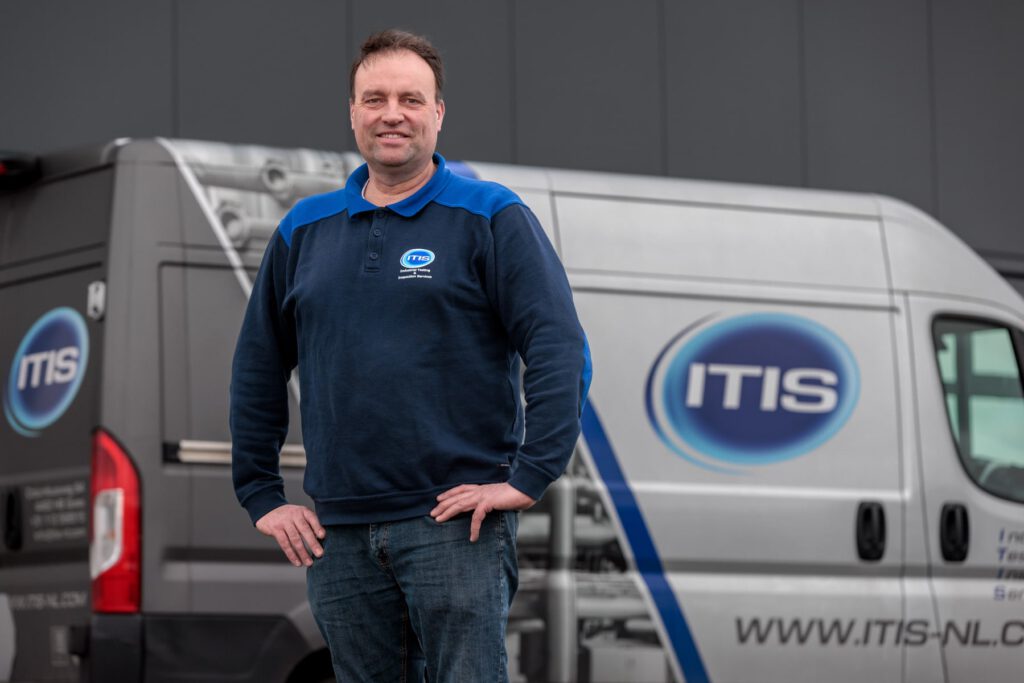
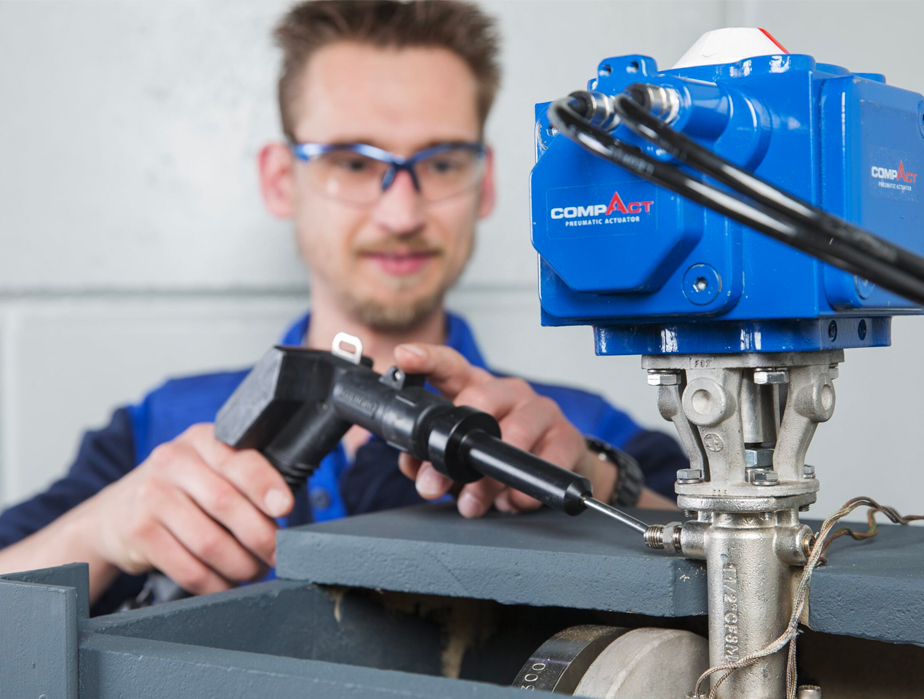
Many tonnes of raw materials and energy are lost unnoticed during a production process. “For example through poorly functioning valves, defective shut-off devices and worn gland packings,” explains Colin Zegers. He is the managing director and owner of ITIS, a company specialising in testing and inspecting such industrial components. ITIS has developed a monitoring system to assess the scale of emission damage. “The leakage figures we’re seeing are enormous. There’s still a long way to go to reach zero emissions by 2050, and we’re keen to contribute.”
Getting the opportunity
That’s no easy task. “It’s hard to get a foot in the door at industrial companies. They mainly look at their permit obligations, and as long as they meet those, there’s little motivation to improve further. Political pressure is needed to change this—unless, of course, we get the chance to show them how much they could save. If you look at steam leaks alone, a company can quickly save tens of thousands of euros.”
Savings within ITIS itself
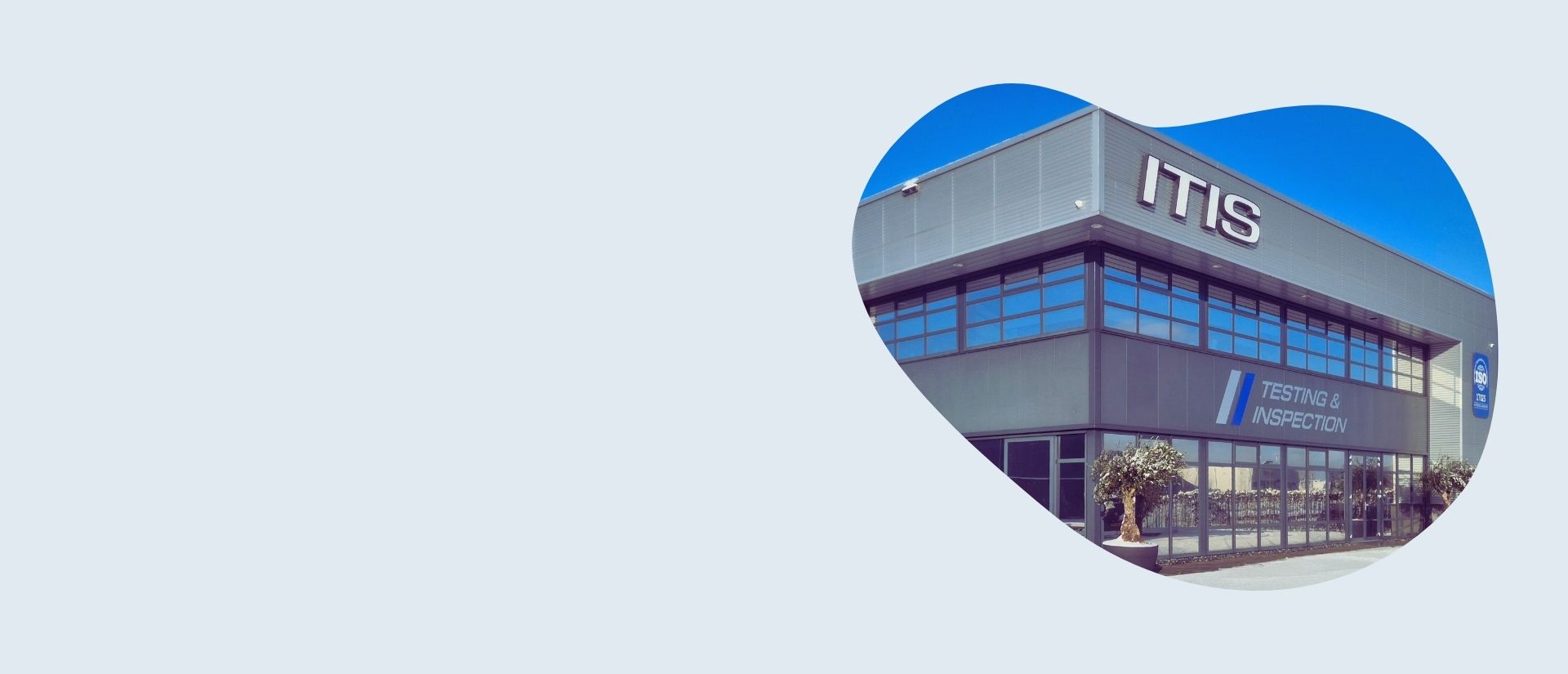
Colin is also constantly looking for savings opportunities within his own company. “We have a modern building with good insulation, LED lighting everywhere and 138 solar panels. The problem is that these panels produce too much power in summer and too little in winter, so we still have to draw from the grid. Ideally, we’d like our own buffer, perhaps battery packs or, in the future, even converting to hydrogen for energy storage.”
If you’re not careful
Whether and how this could be a solution, also in light of other developments, is a difficult question, says Colin. “Partly because the energy market fluctuates so much and I miss clear government policy, it’s hard for me to choose a direction. Plus, as an entrepreneur you want to invest your time in your company. If you’re not careful, you spend 20% of your time on these issues and lose a lot of energy in the process because decisions are so difficult.”
Talking about energy saving
An external adviser could offer a solution, Colin believes. “But you have to make sure you’ve got someone who isn’t preaching to their own choir. A solar-panel expert will always advise solar panels. Impuls Zeeland once offered me the chance to talk to someone about energy saving. I’m certainly open to that—there just wasn’t enough time last quarter.”
The coach’s expertise
When an independent Transition Coach comes by, he or she also needs to be well-versed, Colin adds. “They need to know the available technologies and the figures. I’m not interested in vague terms like ‘short payback period’. I want to know exactly how much money it costs and saves, how long the payback period really is and which subsidies I can use.”
Focus on the individual company
A Transition Coach must also pay attention to a company’s specific situation, Colin believes. “In terms of starting point and technical options, but also financially. One company is flush with cash, while another has to count every cent. That also affects any advice. Tailor-made solutions are crucial. Knowledge of the specific industry isn’t as important— we have that ourselves.”
Collaboration
Colin sees KicMPI as a good partner for providing independent Transition Coaches—just as he does Impuls Zeeland. “It would be good if these parties joined forces instead of working separately. They can strengthen each other.”
Differences, but also many similarities
- It isn’t easy to decide which steps to take in the energy transition on your own.
- Available technologies evolve rapidly, and factors affecting the business case—such as energy prices—change just as quickly.
- The fresh perspective of an outsider or Transition Coach can add great value, especially for smaller companies. A Transition Coach must consider a company’s specific circumstances.
- Key requirements for this outsider include:
- In-depth technical knowledge and understanding of a company’s operational processes.
- The Transition Coach must be independent and have absolutely no ties to suppliers or competitors.
- Fully understanding the problem and challenge—and matching that challenge to a solution and supplier—is crucial. Companies expect advice that is as concrete as possible, with regional partners who can help implement it.
- Alongside technical and supplier advice, insight into the business case is also important.
- Co-operation and alignment between organisations such as KicMPI and Impuls Zeeland are seen as added value. Recent talks KicMPI had with various members confirmed this picture and need.
- Recent talks KicMPI had with various members confirmed this picture and need.
Do you have any questions or would you like to use our services? Contact us directly; we’re happy to help!