
ISO 12101 forces industry to prove emissions instead of guessing
The article makes it clear that stricter regulations on VOCs and Substances of Very High Concern inevitably expose the shortcomings of current stem-seal practices. Although LDAR programs are increasingly mandatory, in practice there is a lack of reliable, comparable data on the actual performance of stem seals under realistic operating conditions. Many seals perform acceptably in a one-off laboratory test, but fail when subjected to thermal cycling, varying stem movements and long-term loading, leading to leaks, downtime and compliance risks. Especially in existing installations, most of the installed base therefore remains unnecessarily emission-prone, while legislation such as REACH and comparable international frameworks leave little room for assumptions. These performance deficits are made visible in practice through targeted fugitive-emission tests on stem seals.
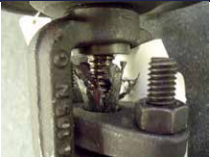


ISO 12101 positions itself as the indispensable instrument for breaking through this structural problem by codifying standardized, transparent and motion-specific test methods for stem seals. The standard makes it possible to compare performance objectively, supports different sealing technologies and explicitly matches real-world stem movements such as NRRS, RNRS and RRS. As author and seasoned specialist in leak testing and standards development, Colin Zegers emphasizes how ISO 12101 gives manufacturers, repair shops and asset owners concrete tools to demonstrably cut emissions, strengthen ISO 15848-1 trajectories and strategically upgrade existing valves. Anyone who wants to understand how ISO 12101 turns assumptions into provable performance in practice will find indispensable information in the full article.
Do you have any questions or would you like to use our services? Contact us directly; we’re happy to help!