

Fire-safe testing forms the technical backbone of the Bergermeer megaproject
The article explains how, in the Bergermeer gas storage project, safety was not treated as a mere constraint but as a design requirement, precisely because of the scale and strategic role of the facility. With a working volume of 4.1 billion cubic metres of gas and a central position in the North-West European gas market, failure of critical components such as valves is not an option. Fire-safe ball valves were therefore deliberately selected and extensive fire-safe testing performed to verify that the valves maintain their integrity during and after exposure to fire conditions. These tests are essential to ensure that neither internal seat leakage nor external leakage occurs at the very moments when installations are under extreme pressure and temperature—the scenarios in which safe and reliable operation is most at risk. In practice these requirements are validated with Fire-Safe tests carried out under specified fire and pressure conditions.
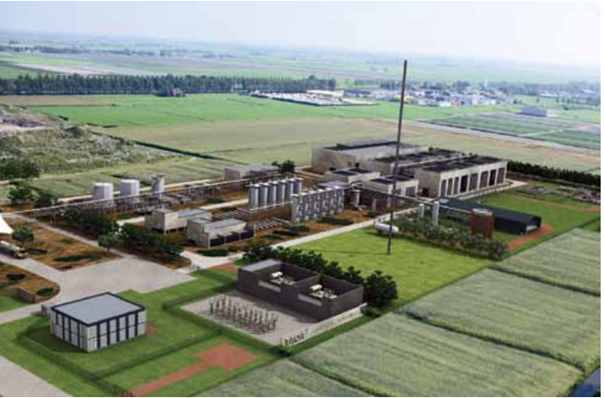
The approach adopted by TAQA and Fluor illustrates how international standards and independent expertise can be combined in a practical, actionable safety framework. Fire-safe tests, performed by ITIS under the supervision of valve vendors, notified bodies and project representatives, expose valves to controlled fire loads and measure both internal and external leakage against the maximum allowable values defined in the standard. Colin Zegers positions these tests as more than a formal step; they provide demonstrable proof that valve designs are suited to realistic fire scenarios within large-scale energy infrastructure. Anyone wishing to understand why fire-safe testing is vital for the reliability of strategic energy projects will find indispensable technical context in the full article.
Do you have any questions or would you like to use our services? Contact us directly; we’re happy to help!