
He thought he knew. The test thought otherwise.
The technical manager had gone through the specifications. He knew the product. He had worked with this type of valve for years, knew how it behaved in the installation, and had never had any notable problems. So when the question came up whether the valves were certified for low emissions, his answer was honest: “these just perform well, I know that from experience.”
Experience counts for a lot, but in a test according to ISO 15848-1, it carries no weight.
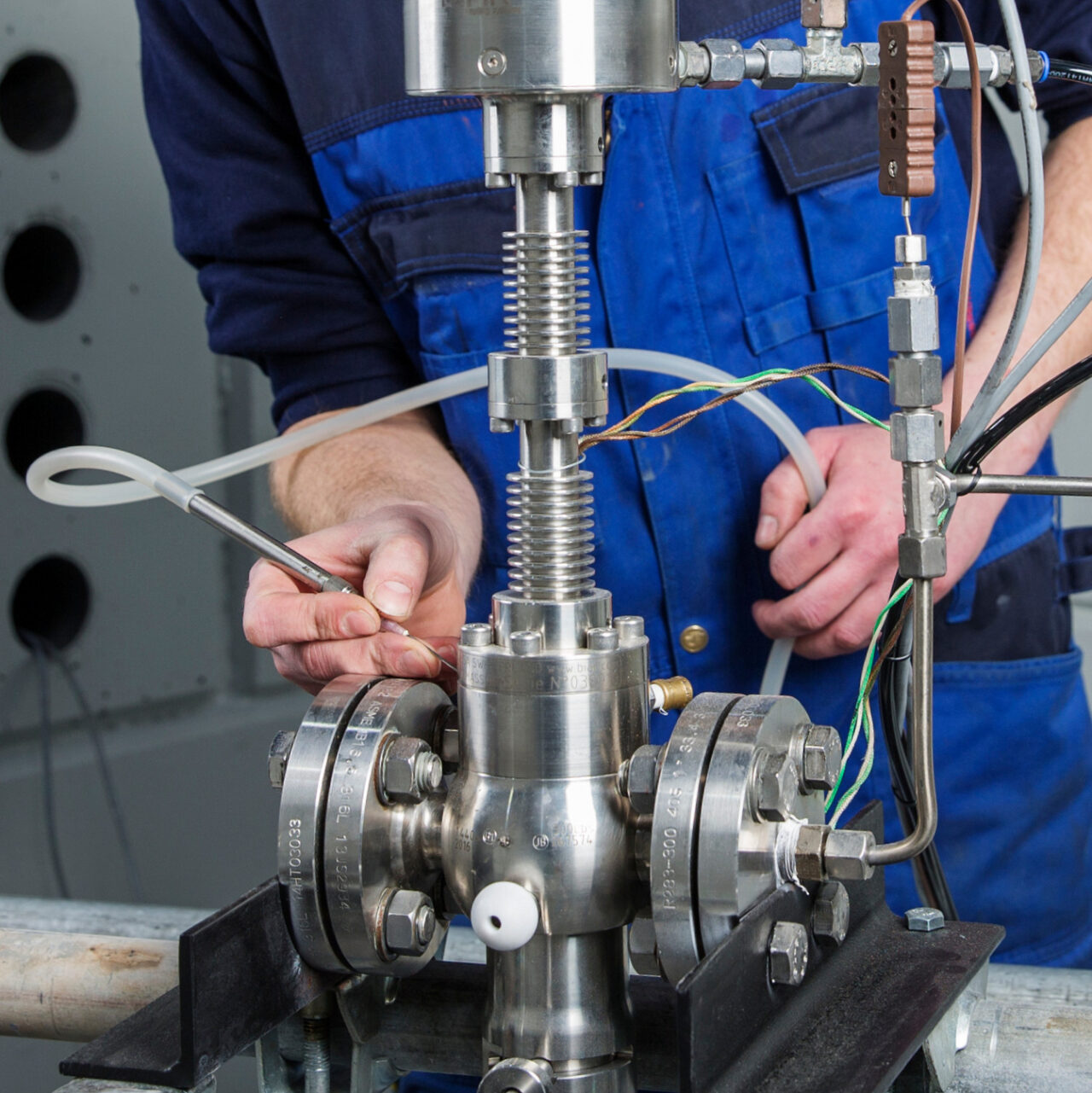
Because ISO 15848-1 touches on more than just a technical inspection. It touches on permits, LDAR programmes, ESG scores and the question of whether your company can demonstrate what it claims. What the test measures is not visible in day-to-day practice. Leakage along the stem seal at the level relevant to fugitive emission regulations is something you cannot see. You cannot smell it. Your installation data will not show it. The only thing that demonstrates it is a measurement using helium or methane under controlled pressure and temperature cycles, carried out by an independent laboratory.
When the valves were eventually tested, because the permit required it, one type fell outside the required leak class. Not dramatically. Not visibly in the installation. But measurably, and therefore not acceptable.
The problem with “we have never had any complaints”
This is the most common argument in procurement and technical management of valves in the process industry. And it holds up, right up until the moment someone starts measuring.
Emission requirements have tightened in recent years. What was acceptable five years ago sometimes falls outside permit standards today. Regulators are increasingly asking not just whether an installation meets the standard, but whether you can prove it. With an independent, accredited test certificate. Not with a supplier declaration, not with internal documentation, and not with ten years of trouble-free operating experience.
For the technical manager in this story, this meant a retest, adjusting packing material and a delay he had not seen coming. The valve was not bad. The documentation was not complete.
What you want to know before placing the order
Does this valve type meet the leak class my permit requires? And can I demonstrate that with a certificate from an independent laboratory?
If the answer to that second question is no, that is the moment to act. Not after commissioning, not when the inspector is already scheduled.
Want to know more about how fugitive emission testing works and what it delivers? Get in touch. We are happy to discuss what is relevant in your situation.
Do you have any questions or would you like to use our services? Contact us directly; we’re happy to help!